
The Complete Guide to Cleaning
Everything on an Acoustic Guitar
Table of Contents
There’s nothing like the feeling of picking up and playing a freshly cleaned acoustic guitar. The finish gleams, the fretboard is smooth and fast, and you can glide around the neck effortlessly. A clean guitar doesn’t just look and feel better—it sounds better, too.
Acoustic guitars live a hard life out of their cases, around campfires, and living on couches. Over time they accumulate grime, oils, and dust from our hands and the environment around them. This buildup can do more than just make your guitar look dull, it can damage your finish, make your fretboard feel sticky, and corrode your strings. Proper cleaning and care are essential for protecting your guitar, maintaining its tone, and ensuring it remains a joy to play for years to come.
This guide will walk you through the essential steps to clean every part of your acoustic guitar: the body, the neck, the fretboard, frets, hardware, and more. All cleaning tips presented can be used on any fretted acoustic instrument like ukulele, mandolin, banjo, as well as electric guitars and basses too.
Why Do I Need To Keep My Guitar Clean?
The more you play your guitar, the oils and sweat from your hands and skin build up on the finish and the fretboard. You’ll see this as a hazy film on the finish or discoloring on the fretboard. This film attracts dust and these duct particles are actually what scratches your finish like sandpaper.
Acoustic guitars have a thin finish so the wood can vibrate more freely, which helps produce more volume. Because this finish is delicate, keeping it clean is crucial. This will protect the guitar’s wood from damage and preserve its sound over time.
Do I Need Any Special Setup To Clean My Acoustic Guitar?
Before you start, make sure you have the right tools on hand. Having a clean, secure workspace is key. A large, steady surface like a work bench or kitchen table will make sure your guitar is stable while you work. You should also protect the guitar and surface from scratches and spills. A clean towel will work, but it’s worthwhile to invest in a mat and neckrest that will keep your guitar in place and not scratch the finish. A neck rest is a must have when working on an acoustic guitar. Because of its deep body, an acoustic guitar can easily tip when lying on its back, which could damage the headstock.
Our Premium Instrument Work Mat provides a safe, non-slip surface to support your guitar while you work and prevents scratching the finish. It’s the perfect foundation for any instrument care routine.
The Cradle Cube Neck Support helps protect the neck and headstock from hitting the table and doing potential damage. It also supports the neck while cleaning the fretboard, an essential step for a deep clean.
-
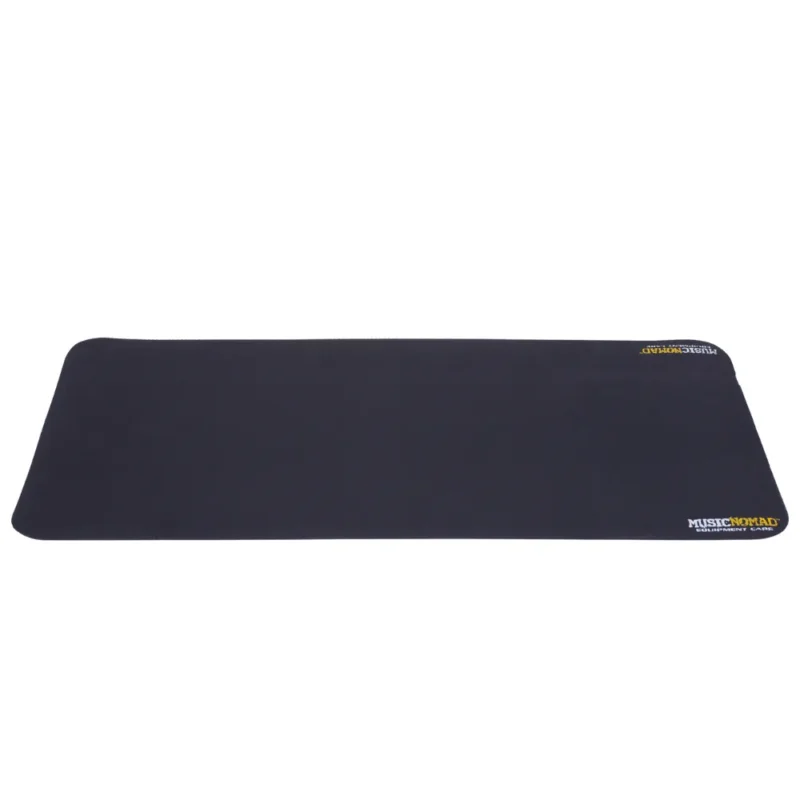
Premium Instrument Work Mat
MN208$17.99Rated 5.00 out of 5(1) -
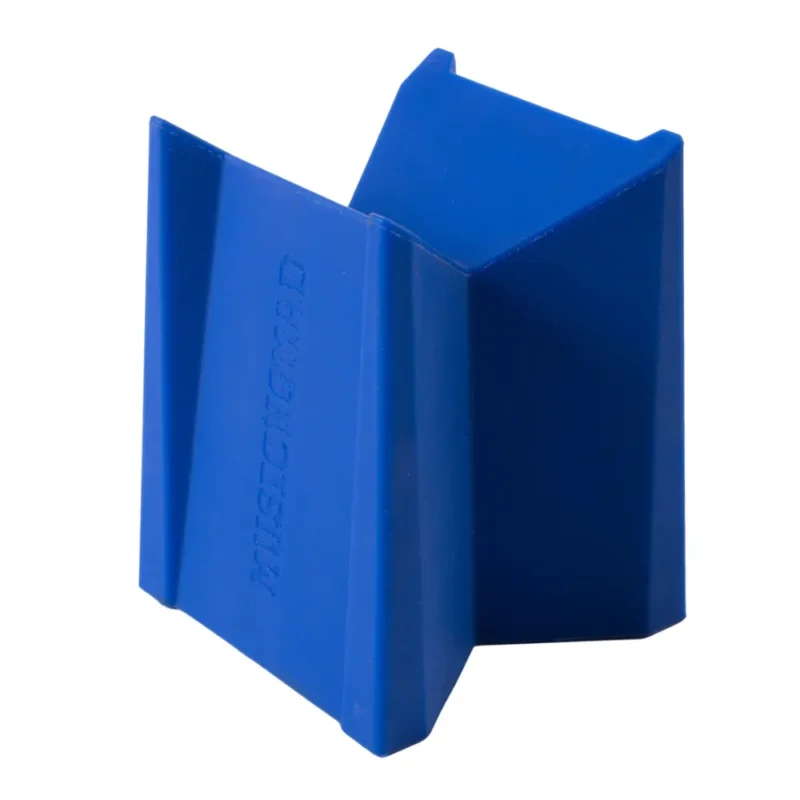
Cradle Cube – String Instrument Neck Support
MN206$19.99Rated 5.00 out of 5(1)
Cleaning Your Finish
What Causes My Guitar Finish To Get Dirty?
When playing guitar the grime, dead skin, and oils on your hands build up on the finish, frets, and fretboard. If you don’t remove the grime, it can build up and get sticky. This can attract dust from the environment and even from your pick being ground down while playing Over time this creates a film on the guitar that can damage the finish and be very hard to remove. You can avoid the build up by wiping down your guitar after you play, but an occasional deep clean is needed as well.
Will Dirt And Dust Damage My Guitar?
Yes, the build up of sweat and grime is corrosive to delicate finishes like nitrocellulose and metal parts like tuners. In some extreme cases the grime acts like glue and will hold bridge pins in place, making them harder to remove. The buildup of dust will act like tiny abrasives and will scratch and wear down the finish. On older finishes that have cracks and wear from weather checking the dirt and grime can form under the finish and do damage to the wood. That’s why it’s important to keep your guitars clean to prevent this damage.
What Kind of Finish Does My Guitar Have?
Most acoustic guitars have one of two finishes: gloss or satin/matte. Because each type requires a different cleaning method, it’s crucial to know which one your guitar has.
Gloss: Gloss finishes are shiny and reflective, and feel smooth to the touch. They are often made from nitrocellulose lacquer or polyurethane. It’s a durable finish that can be polished to a mirror-like shine. Think of a classic Martin, Gibson, or Taylor guitar.
Satin: Also known as a “matte” finish, has a flat, non-reflective appearance. It has a textured feel to the touch. It’s often used to allow the natural wood grain to show through and can give the instrument a more natural, open tone.
If you are unsure what type of finish your guitar has, contact the manufacturer or a qualified guitar technician for guidance.
What Do I Need To Clean A Gloss Guitar Finish?
For a gloss finish you’ll need microfiber cloths and brushes to remove dust, a cleaner made for gloss finishes, a polish for deep cleaning, and a wax for protecting the finish. You’ll also need polishing cloths to clean and buff the finish.
- Dust-removing brush or cloth: Before cleaning your finish, you need to remove the dust that will scratch the finish as you clean and buff the guitar. Using a soft brush or microfiber pad like our Nomad Tool will grab the dirt and dust and trap it in the cloth and off the finish.
- Gloss finish cleaner: When choosing a cleaner make sure that it is both safe for your guitar’s lacquer type (nitrocellulose, polyurethane, shellac, etc.) and finish sheen (glossy or satin). For gloss finishes, Guitar ONE can clean, polish, and wax all in one bottle and is safe for all lacquer types. Guitar Detailer is also a great straight cleaner with no polish or wax.
- Gloss finish polish: If your finish is really dirty, dull, hazy, or scuffed, polishing it will bring it back to its original shine. Be sure to use silicone-free formula like our Guitar Polish so you won’t damage a delicate finish or make future repairs more difficult.
- Gloss finish wax: For a long lasting protection using a wax will form a protective barrier on top of the finish that will shield it from moisture, sweat, and dust. It will also minimize imperfections in the finish and add a deeper gloss. IIt helps reduce the appearance of fine scratches. It helps reduce the appearance of fine scratches. It’s important to use an acoustically transparent wax, like our Guitar Wax, which will protect the finish but not dampen your guitar’s tone.
-
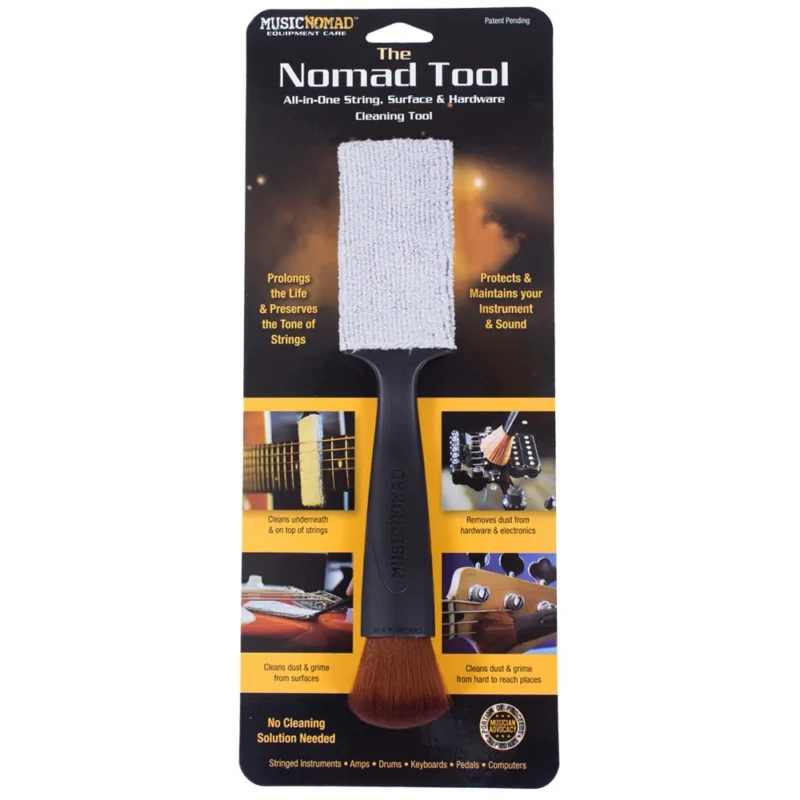
The Nomad Tool – All in 1 String, Body & Hardware Cleaning Tool
MN205$9.99Rated 5.00 out of 5(1) -
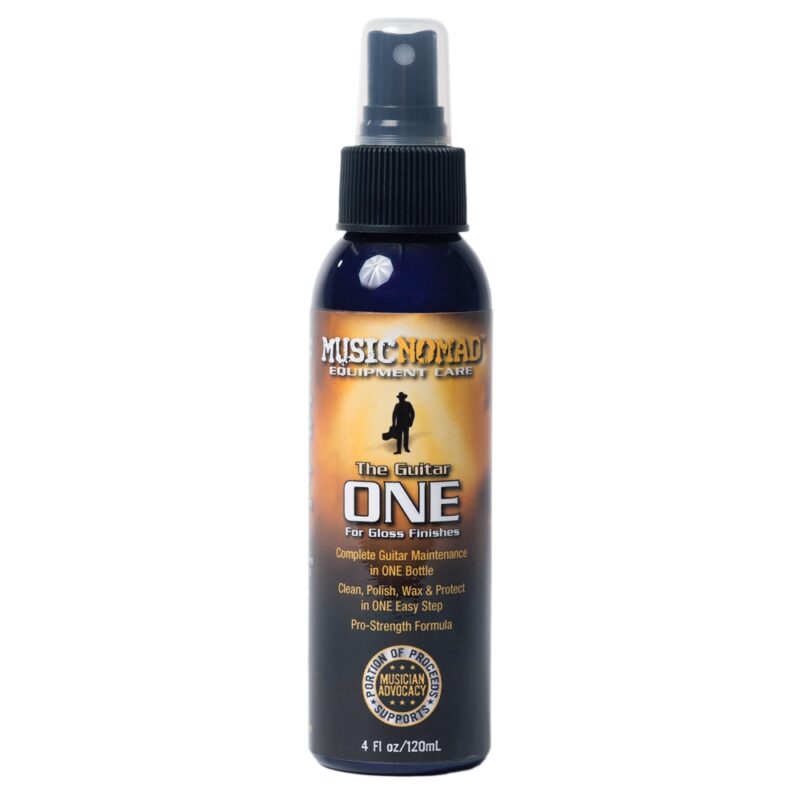
The Guitar ONE – All in 1 Cleaner, Polish, Wax for Gloss Finishes
MN103$9.99Rated 5.00 out of 5(2) -
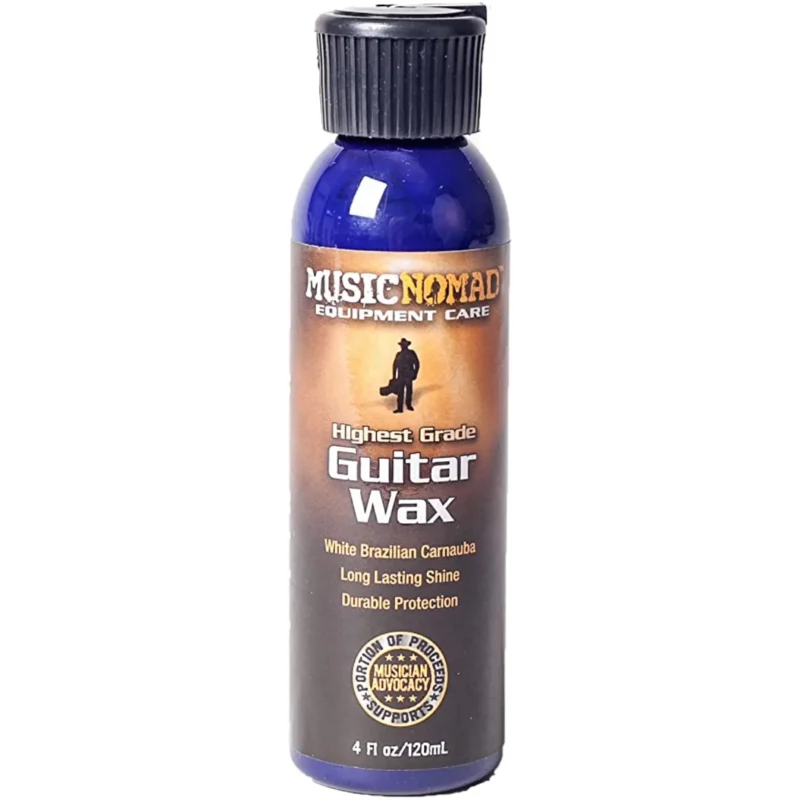
Guitar Wax – Highest Grade Brazilian Carnauba
MN102$9.99 -
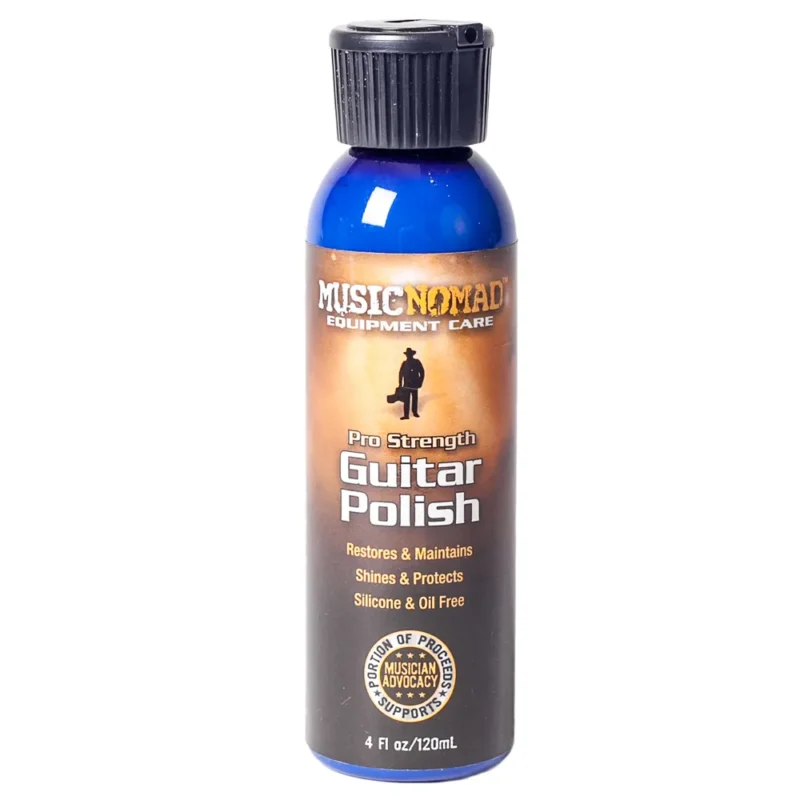
Guitar Polish – Pro Strength Formula
MN101$9.99 -
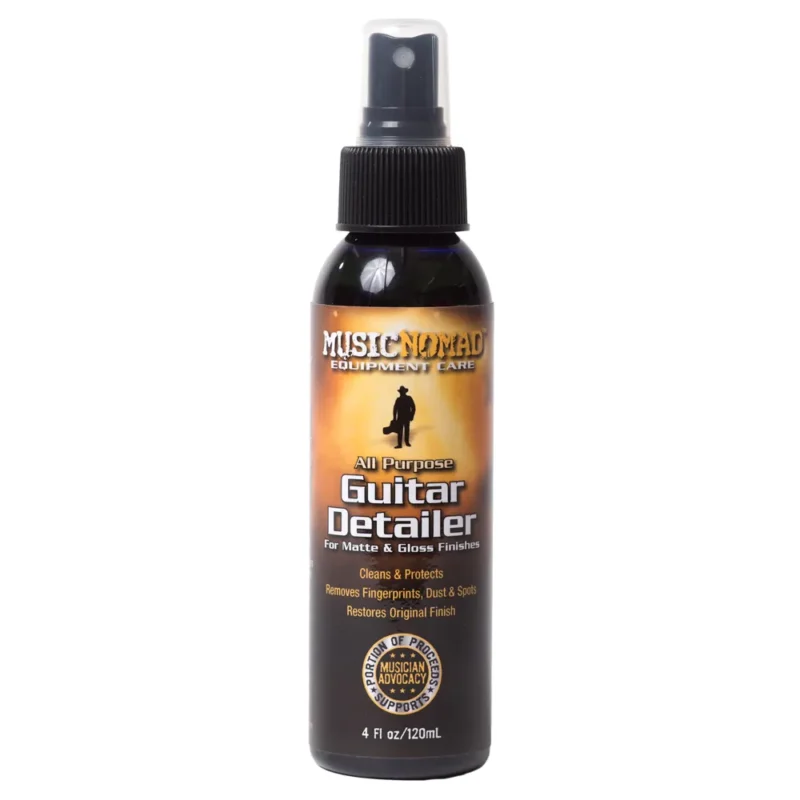
Guitar Detailer – For Matte & Gloss Finishes
MN100$8.99
How to Clean & Polish Your Guitars Like the Pros & Top Repair Shops Do
How Do I Clean a High-Gloss Finish?
- Remove the dust from your finish: You can clean your guitar with the strings on or off, but removing them allows you to clean more thoroughly. It’s especially important to remove all dust, as these tiny particles, not the cleaning fluid or cloth, is what actually scratches the finish.
Using a light touch and a brush or microfiber cloth, like our Nomad Tool, remove dust from all the surfaces of the finish. Pay special attention to hard to reach areas where dust can collect such as around the bridge, between the bridge pins, the pickguard, and tuners. - Clean the finish: Spray the cleaner (like Guitar ONE) on a Microfiber Detailing Cloth. By spraying the cloth rather than the guitar directly, you can prevent putting on too much cleaner and avoid hitting the unfinished wood of the bridge, fretboard, or inside the guitar.
Starting with the top, soundboard side, of the guitar, use the cleaner-sprayed cloth and wipe down the finish, removing grime, fingerprints, and smudges. Use a dry part of the cloth and go over the same area, buffing the finish and removing any excess cleaner. Pay extra attention to areas where your arm touches the finish, such as the lower bout where your arm rests and the finish gets extra dirty and smudged. Repeat as necessary until the finish is clean. - Repeat the process for the back, sides, back of the neck, and headstock of the guitar. Pay close attention to the back of the neck, as it likely has the most built up grime. If you are using Guitar ONE you can also use it to clean the plastic pickguard and metal tuners as well. Just wipe with the cleaner and cloth, and buff with the dry part of the cloth.
- When you are working around flush-mounted pickguards, be careful to only wipe away from the corners and edges, not toward them. If you wipe toward the corners, it’s very easy for the cloth to catch on the pickguard and accidentally pull it up.
What If My Guitar Needs A Deep Clean?
If your gloss-finished guitar has been played heavily and not regularly cleaned, or has small scratches from playing, it’s recommended that you polish the finish rather than just cleaning it. This will help rejuvenate the finish and bring back its original shine and smooth feel.
To polish the finish, the steps are nearly the same as cleaning it, however you’ll need a low-pile and a high-pile cloth to polish and buff the finish effectively. Our low-pile Microfiber Suede Polishing Cloth and high-pile Microfiber Guitar Detailing Cloth were made just for this purpose.
-
Microfiber Guitar Detailing Cloth
MN202$7.99 -

Microfiber Suede Polishing Cloth
MN201$6.99
- Remove the dust from your finish: You can clean your guitar with the strings on or off, but removing them allows you to clean more thoroughly. It’s especially important to remove all dust, as these tiny particles, not the cleaning fluid or cloth, is what actually scratches the finish.Using a light touch and a brush or microfiber cloth, like our Nomad Tool, remove dust from all the surfaces of the finish. Pay special attention to hard to reach areas where dust can collect such as around the bridge, between the bridge pins, the pickguard, and tuners.
- Polish the finish: Add a small (pea-sized) amount of the Guitar Polish onto the low-pile cloth. Working in small sections, use the cloth to wipe the polish onto the guitar’s top, soundboard side) in circular motions. Let the polish dry (about 30 seconds) until a light haze forms on the finish. Then use the high-pile cloth to buff off the haze, revealing a shiny, clean finish.
Pay extra attention to areas where your arm touches the finish, such as the lower bout where your arm rests and the finish gets extra dirty and smudged. Repeat as necessary until the finish is polished. - Repeat the process for the back, sides, back of the neck, and headstock of the guitar. Pay close attention to the back of the neck, as it likely has the most built up grime. If you are using Guitar Polish you can also use it to clean the plastic pickguard and chrome and nickel tuners as well. Just wipe with the polish and low-pile cloth, and when you see it haze, buff with the high-pile cloth. Some manufacturers use very thin gold plating, so it’s best to avoid using a polish on it.
- When you are working around flush-mounted pickguards, be careful to only wipe away from the corners and edges, not toward them. If you wipe toward the corners, it’s very easy for the cloth to catch on the pickguard and accidentally pull it up.
How to Polish & Restore Your Guitar Body, Hardware & More
Do I Need To Wax My Gloss Finish?
- Remove the dust from your finish: As described in the cleaning and polishing section, use a brush or microfiber cloth like our Nomad Tool to remove dust from all the surfaces of the finish.
- Clean or polish the finish: As described in the cleaning and polishing section, clean the body to make sure the finish is free of grime and dirt. Pay extra attention to areas where your arm touches the finish, such as the lower bout where your arm rests and the finish gets extra dirty. Repeat as necessary until the finish is clean.
- Wax the finish: Apply the wax as you would a polish, using a dime-sized amount of polish on a low-pile cloth like our Microfiber Suede Polishing Cloth and apply the wax in circular motions to one area of the guitar at a time. Then use a high-pile cloth like our Microfiber Guitar Detailing Cloth to buff the guitar to a mirror shine. When applying wax, applying multiple thin coats are better than applying a thick coat. Using less is better than using too much.
- Reapplying the wax: If you play every day then once a month you should clean first and then wax in areas that you rub up against like where your arm rests, the back of the neck, or back of the guitar. If you play once a week then every 3 months you can reapply wax as needed.
What Do I Need To Clean A Satin Or Matte Guitar Finish?
For a satin/matte finish you’ll need just a few microfiber cloths and brushes to remove dust, a cleaner made for satin/matte finishes, and additional cloths to clean and lightly buff the finish. It’s very important to use a cleaner that does not have any polishing abrasives or wax when cleaning a satin/matte finish. These can change the look and feel of the finish permanently.
- Dust-removing brush or cloth: Before cleaning your finish, you need to remove the dust that will scratch the finish as you clean and buff the guitar. Using a soft brush or microfiber pad like our Nomad Tool will grab the dirt and dust and trap it in the cloth and off the finish
- Matte finish cleaner: When choosing a cleaner make sure that it is both safe for your guitar’s lacquer type (nitrocellulose, polyurethane, shellac, etc.) and finish sheen (glossy or matte). Guitar Detailer which has no abrasives, harsh chemicals, or wax, making it extremely safe for satin/matte finishes.
How Do I Clean a Satin or Matte Finish?
It’s very important to remember that when cleaning a satin/matte finish, you should never rub too hard. Rubbing the finish too hard can lead to an uneven shine. Even when buffing off the cleaner, remember to use light pressure.
- Remove the dust from your finish: You can clean your guitar with the strings on or off, but removing them allows you to clean more thoroughly. It’s especially important to remove all dust, as these tiny particles, not the cleaning fluid or cloth, is what actually scratches the finish.Using a light touch and a brush or microfiber cloth, like our Nomad Tool, remove dust from all the surfaces of the finish and around the bridge, between the bridge pins, the pickguard, and tuners.
- Clean the finish: Spray a cleaner like our Guitar Detailer on a Microfiber Detailing Cloth. By spraying the cloth rather than the guitar directly, you can prevent putting on too much cleaner and avoid hitting the unfinished wood of the bridge, fretboard, or inside the guitar.
Starting with the top (soundboard side) of the guitar, use the cleaner-sprayed cloth and gently wipe down the finish, removing grime, fingerprints, and smudges. Use a dry part of the cloth and go over the same area, gently buffing the finish and removing any excess cleaner. Pay extra attention to areas where your arm touches the finish, such as the lower bout where your arm rests and the finish gets extra dirty and smudged. Repeat as necessary until the finish is clean. - Repeat the process for the back, sides, back of the neck, and headstock of the guitar. Pay close attention to the back of the neck, as it likely has the most built up grime. If you are using Guitar Detailer you can also use it to clean the plastic pickguard and metal tuners as well. Just wipe with the cleaner and cloth, and buff with the dry part of the cloth.
- When you are working around flush-mounted pickguards, be careful to only wipe away from the corners and edges, not toward them. If you wipe toward the corners, it’s very easy for the cloth to catch on the pickguard and accidentally pull it up.
How to Clean Your Guitar Like the Pros: Matte, Satin or Gloss Finishes
Cleaning Your Fretboard
Why Does My Guitar Fretboard Get Dirty?
The fretboard, also called fingerboard, is the most-touched part of your guitar, and it’s where sweat, skin oils, and dead skin cells quickly build up. This grime can make playing feel sticky and can even harm the wood over time. Without proper care, a fretboard can crack and frets can rust and oxidize, leading to expensive repairs or making your guitar unbearable to play. Luckily, it’s easy to clean, condition, and protect your fretboard to keep your guitar playing better for life.
For a deep dive on cleaning and care for your fretboard see our complete guide.
What Do I Need To Clean My Fretboard?
Before caring for your fretboard, you need to determine if your fretboard is finished or unfinished. Most acoustic guitar fretboards are unfinished, meaning that the wood has been sanded smooth and the frets installed. This is the most common across Gibson, Martin, Takamine, Guild, and many others.
The most common unfinished fretboard woods are rosewood and ebony, with granadillo, pau ferro/morado, walnut being other popular options. A general rule of thumb is that if you can feel the grain of the wood and it is not glossy, the fretboard is unfinished. If you are unsure, contact the manufacturer or a guitar tech to confirm.
This guide will focus on unfinished fretboards, if your guitar has a finished fingerboard, our Fretboard Cleaning And Care Guide has the complete cleaning and care steps for finished fretboards.
To properly clean and condition your unfinished fretboard, it’s best to remove the strings completely. For a light clean and condition all you need is a fretboard cleaner and a microfiber cloth. This method works great for rosewood, ebony, and walnut and other common fretboards.
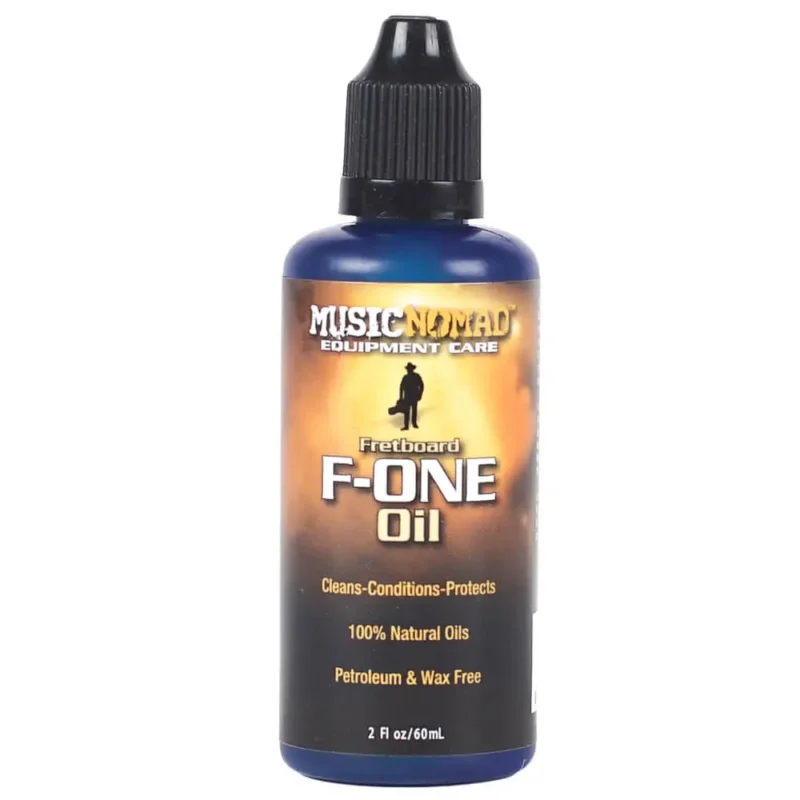
- Fretboard cleaner: Some cleaners will dry out the wood, so we recommend using a fretboard oil like our F-ONE Oil, that will help condition the wood as it cleans. Conditioning the wood helps put the natural oils back into the wood, rejuvenating it, and keeping it feeling and looking good longer. This will help protect the wood as your instrument ages and gets played.
- Microfiber cloth: a low-pile cloth like our Microfiber Suede Polishing Cloth will help grab the dirt and help the cleaner get into the grain for the fretboard and remove stubborn grime.
How to Clean & Condition Your Guitar’s Unfinished Fretboard –
Acoustic, Electric or Bass Guitar
How Do I clean My Fretboard Safely?
- Do a light cleaning with a microfiber cloth like our Microfiber Suede Polishing Cloth to remove any loose dirt.
- Use a fretboard cleaner and conditioner like our F-ONE Oil. Unlike other cleaners and conditioners, F-ONE is formulated using a complex mixture of ultra refined tree and seed oils that help lift up the grime and also condition the wood. This brings moisture back and helps prevent it from drying out and keep the wood feeling and playing better longer.
- Add just a dab of oil between each fret and use your microfiber cloth to gently work the oil into the wood, making sure to get right up to the frets.
- Let the oil sit and penetrate the wood for a few minutes, up to 10 if the fretboard has more dirt and grime.
- After letting the oil penetrate, use a dry part of your cloth to buff out the oil, and you’re done. The wood will be rejuvenated and have a smoother feel and darker look, just as it did when it was new. For really dry fretboards, you may need to repeat the oil process.
If your fretboard has hardened dirt and built up grime, you’ll need to get more aggressive with your cleaning and conditioning. You need the right tools to remove the grime without damaging the wood.
- Do a light cleaning with a microfiber cloth like our Microfiber Suede Polishing Cloth to remove any loose dirt.
- Use a fretboard cleaner and conditioner like our F-ONE Oil to help lift up the grime and bring moisture back.
- Add just a dab of cleaner between each fret and use a cloth to scrub the dirt. We recommend the rough side of the 2 ‘n 1 Fretboard Cloth included with our F-ONE Unfinished Fretboard Care Kit. This will grab the dirt off the wood and trap it in the cloth.
- For really dirty fretboards, add another dab of cleaner and use a brush to scrub away the grime. The brush included with our F-ONE Unfinished Fretboard Care Kit has a special v-shape to get right next to the frets. This will help remove the grime built up around the frets which is very hard to reach with just a cloth.
- The brush also has a scraper to remove stubborn grime. Use the scraper to remove that hardened dirt, always going with the grain. You want to move the scraper along the path of the string, not across the fretboard. This is much safer than using a razor blade, which can easily gouge or scratch the wood.
- Finally use a soft microfiber cloth, like the soft side of the 2 ‘n 1 Fretboard Cloth to buff the fretboard and remove any excess cleaner.
- For really dry fretboards, you may need to reapply the oil to properly condition the fretboard.
-
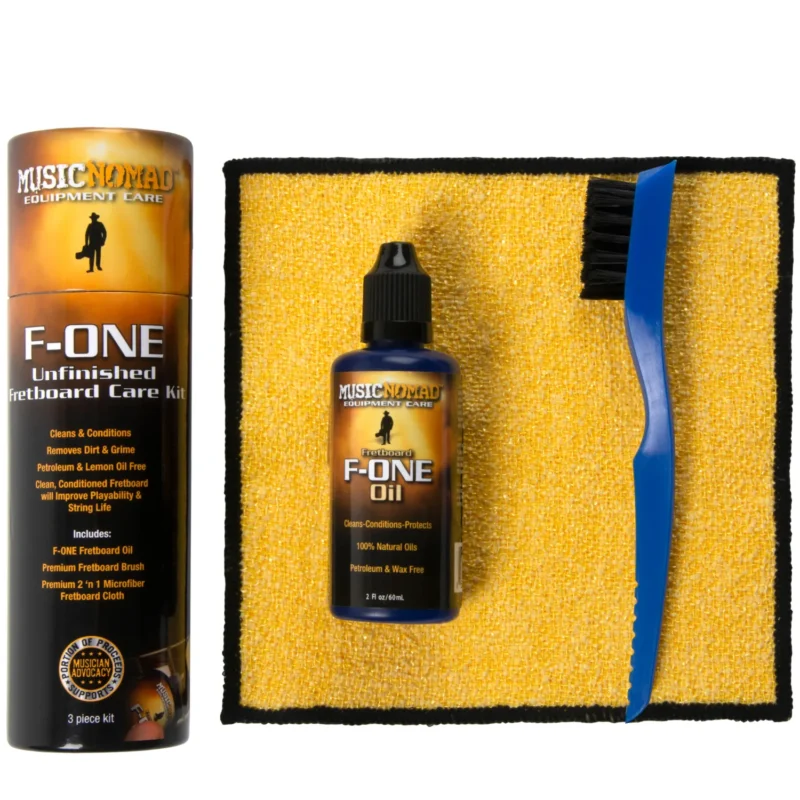
F-ONE Unfinished Fretboard Care Kit – Oil, Cloth, Brush
MN125$19.99Rated 5.00 out of 5(2)
Why Do I Need to Condition My Fretboard?
Once your fretboard is clean, it’s important to condition it, especially if it’s unfinished wood like rosewood or ebony. Conditioning hydrates the wood and protects it from drying out and cracking. Without proper care, a fretboard can crack and frets can rust and oxidize, leading to expensive repairs or making your guitar unbearable to play. Luckily, using a penetrating oil like F-ONE Oil will not only clean the fretboard, it will condition the wood by adding back the oils a fretboard loses over time.
If you play often, sweat while playing, or leave your guitar out of a case or hung on a wall, you may need to clean and condition your fretboard more often. A good rule is that if your fretboard feels sticky, you see a buildup of grime around the frets, the fretboard wood appears dry or your fretboard plays more slowly, it’s time to clean it.
We recommend cleaning and conditioning your fretboard every six months. The dry winter months with a heater running and hot months with an air conditioner running can really dry out and damage your fretboard. Adding needed oils back to the wood, like those in our F-ONE Oil, will keep your fretboard playing great and hydrated all year long. A good rule is that if your fretboard looks pale, feels rough, or plays slower than normal, it’s time to condition your fretboard.
Cleaning Your Frets
How Do I Clean My Frets Safely?
When cleaning your fretboard, you may find that your frets are also dirty and oxidized. Your hands transfer oils and dirt to the frets when you are playing, which will make your guitar play poorly. Luckily with a fret polish and a cloth you can remove this grime and get your guitar playing faster and smoother. Our FRINE Fret Polish is a micro-fine polishing compound that quickly removes the grime and gets the fret to a mirror shine.
Before cleaning your frets you need to protect your fretboard. You can do this with masking or low tack tape, but this can be harmful to nitrocellulose and some poly lacquers. Our GRIP Fretboard Guards are specially designed to protect one fret at a time to let you save time when polishing your frets. Our Fret Shield™ Fretboard Protector Guard also makes it easy protect the entire fretboard in an instant.
- With the fretboard protected, add a small dab of fret polish like FRINE Fret Polish on a Microfiber Suede Polishing Cloth and work it into the top and sides of the fret.
- Continue polishing until the grime is removed and the fret has a high shine.
- Use a dry part of the cloth to buff the fret and remove any remaining polish. Note: If the FRINE polish gets on the fretboard, it will not cause damage, but wipe it off immediately to avoid it drying in the wood grain, which may require some additional cleaning to remove.
- Move to the next fret and repeat the process until all the frets are polished.
It’s a good idea to polish your frets whenever you change strings to keep the guitar playing and sounding its best.
-
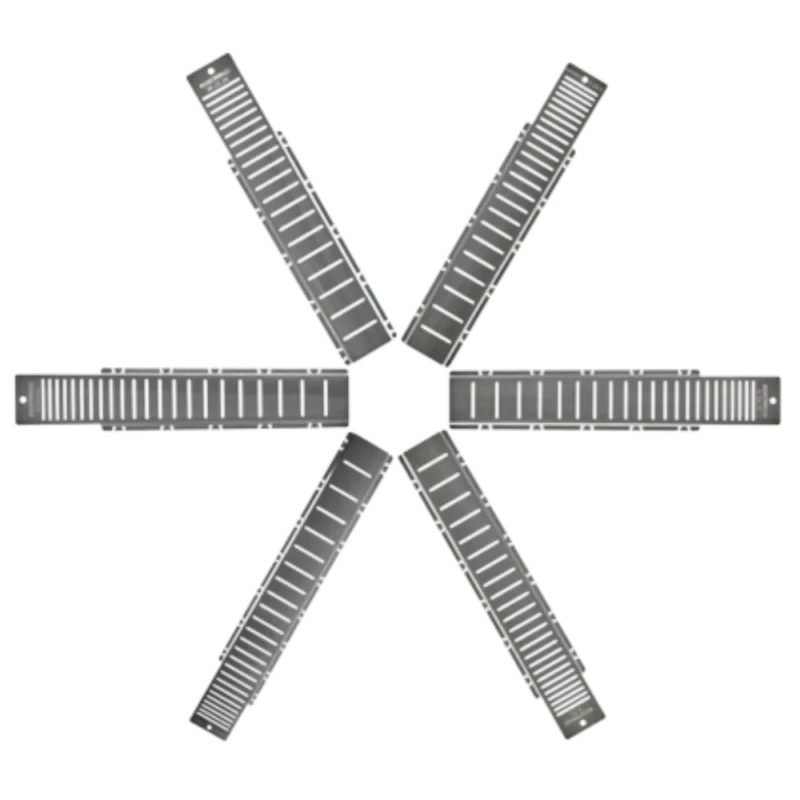
Fret Shield™ Fretboard Protector Guard
MN80X$49.99 – $54.99Price range: $49.99 through $54.99Rated 4.50 out of 5(2)Select options This product has multiple variants. The options may be chosen on the product page -
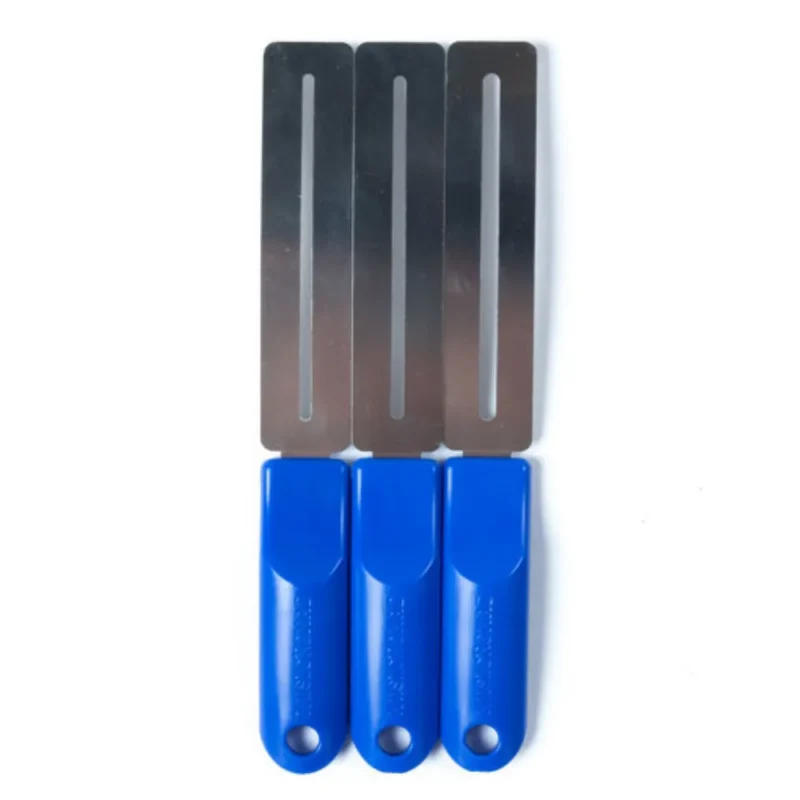
GRIP Guards – Premium Fretboard Guards
MN225$11.99 -
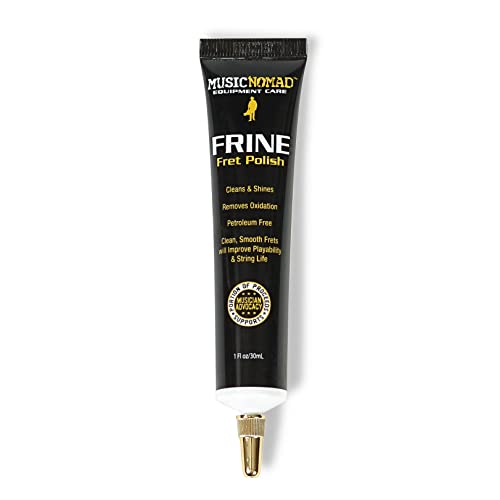
FRINE Fret Polish
MN104$9.99
How to Clean & Polish Guitar Frets
With FRINE Fret Polishing Kit From MusicNomad
Cleaning Your Strings
Why Do My Strings Get Dirty?
The natural oils and acidity in your skin and sweat cause your strings to oxidize and corrode. This causes dirt, grime, sweat, and dead skin to build up on the strings and between the windings, preventing them from vibrating fully. Over time, this will result in a lack of brightness and less sustain. The strings will also feel slower to play and bend unevenly across the frets.
Humidity accelerates this process, especially on the bronze and copper in acoustic guitar strings. Over time, strings can tarnish, corrode, and even rust, further affecting their sound and longevity.
For a deep dive on string maintenance, check out The Complete Guide To Guitar And Bass String Cleaning And Care.
What Do I Need To Clean My Strings?
- Microfiber cloth: Use a cloth like a microfiber suede polishing cloth like our 2 ‘n 1 Beyond Plush Players Cloth or Microfiber Suede Polishing Cloth to grab the surface dirt and grime. For a deeper clean, especially on the underside of the strings, we recommend The Nomad Tool.
- String cleaner: To get the longest life out of your strings use a cleaner like String Fuel to remove stubborn grime and lubricate the strings.
-
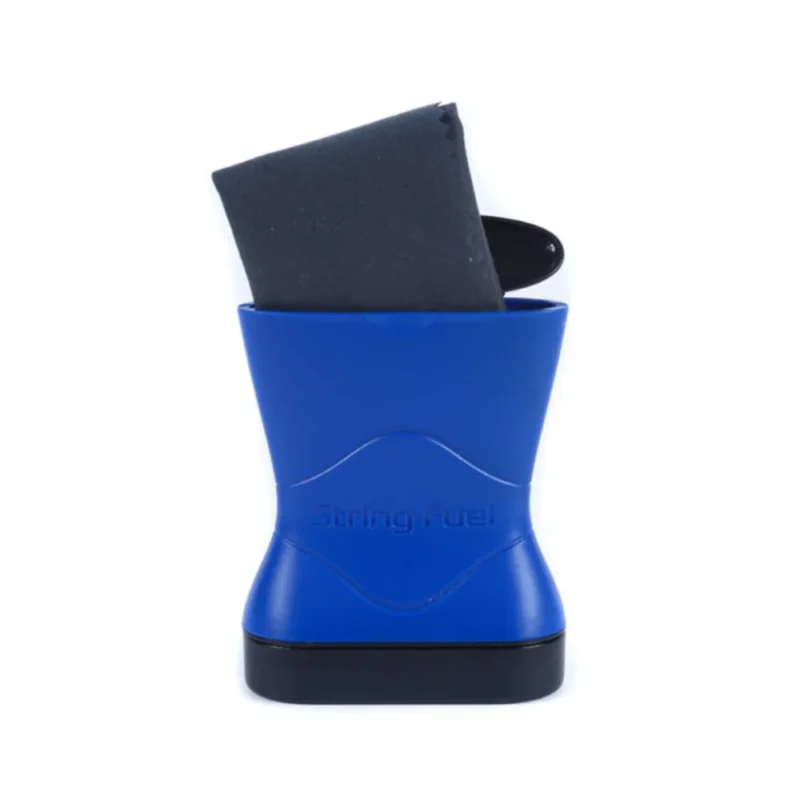
String Fuel – Cleaner and Lubricant
MN109$9.99Rated 5.00 out of 5(1) -
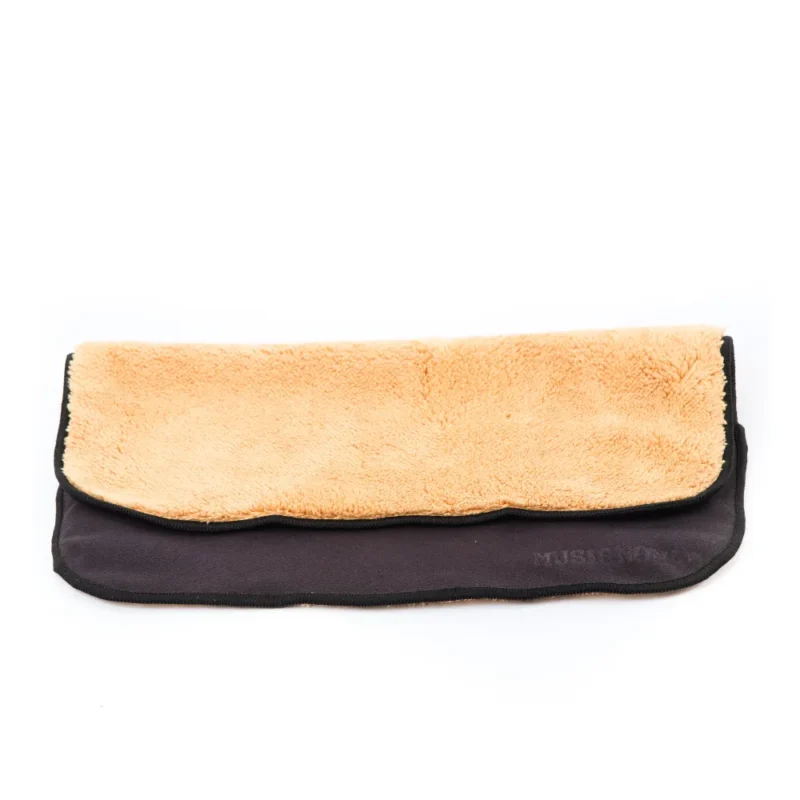
2 ‘n 1 Beyond Plush Players Cloth
MN241$8.99
What’s the Best Way to Clean My Strings?
- Use a microfiber cloth like 2 ‘n 1 Beyond Plush Players Cloth or Microfiber Suede Polishing Cloth to wipe the surface of the strings to remove excess dirt and grime.
- Use a string cleaner, like String Fuel to do a deep clean. Rub the applicator over the strings to remove the dirt and oxidation. String Fuel’s special formula not only removes the dirt, it rejuvenates and lubricates the string for a faster feel with less finger noise and squeak as you play.
The String Fuel applicator also contains a microfiber cloth to clean your strings between songs or to remove some of the String Fuel oils if you prefer a more traditional feel. - For deep cleaning, clean the underside of the strings. For this we recommend The Nomad Tool. It’s thin and flexible with a microfiber pad to clean the top AND bottom of the guitar strings in seconds. It also cleans the frets and fingerboard at the same time.
How to Clean Your Guitar Strings To
Last Longer, Improve Sound & Play Faster
Cleaning Your Acoustic Guitar Bridge
Should I Clean the Saddle, Bridge, and Pins?
Yes, leaving these parts dirty can lead to staining and a buildup of grime. In some cases bridge pins and saddles can become stuck in place from all the grime and dirt. All you need to clean these parts is a Microfiber Suede Polishing Cloth and a gentle cleaner.
For most acoustic guitars, the bridge is made of an unfinished wood that matches the fingerboard. This is most commonly rosewood, but can also be ebony, granadillo, pau ferro/morado, walnut and more. Just like cleaning and conditioning your fingerboard, you follow the same steps.
- Do a light cleaning with a microfiber cloth like our Microfiber Suede Polishing Cloth to remove any loose dirt.
- Use a fretboard cleaner and conditioner like our F-ONE Oil. Unlike other cleaners and conditioners, F-ONE is formulated using a complex mixture of ultra refined tree and seed oils that help lift up the grime and also condition the wood. This brings moisture back and helps prevent it from drying out. This will keep the wood feeling and playing better longer.
- Add just a dab of oil to the wings of the bridge and use your microfiber cloth to gently work the oil into the wood, making sure to evenly distribute the oil over the surface of the bridge.
- Let the oil sit and penetrate the wood for a few minutes, up to 10 if the bridge has more dirt and grime.
- After letting the oil penetrate, use a dry part of your cloth to buff out the oil, and you’re done. The wood will be rejuvenated and have a smoother feel and darker look, just as it did when it was new. For really dry bridges, you may need to repeat the oil process.
To clean your bridge pins and saddle, spray a gentle cleaner (like our Guitar Detailer) onto a Microfiber Suede Polishing Cloth. Gently scrub away any dirt and grime, then buff with a dry section of the cloth. This will prevent a grimey buildup, help the parts retain their original color, and resist staining.
How to Clean & Condition an Unfinished Ebony or
Rosewood Bridge on an Acoustic Guitar
Cleaning Your Hardware
How Do I Clean My Tuners?
Cleaning the metal hardware on your acoustic guitar should not be overlooked. Guitar Polish is a great hardware cleaner that is safe for nickel, chrome, and stainless hardware.
Simply put a small dab of Guitar Polish onto a low-pile Microfiber Suede Polishing Cloth and gently remove any dirt and built-up grime. Once the grime is removed, follow up with a high-pile Microfiber Guitar Detailing Cloth to buff the hardware and remove any remaining polish.
If you have gold-plated tuners, be very careful when cleaning them. Gold plating can be incredibly thin and may be polished off if you are too aggressive. Many times the best way to clean gold hardware is to simply wipe it gently with a cloth without using cleaners or polishes.
How to Polish & Restore Your Guitar Body, Hardware & More
Cleaning Your Electronics
What If I Have A Pickup?
If you have an undersaddle pickup, be very careful when removing it to clean the saddle. Be extra careful not to get any cleaners or oils on the pickup element. With an undersaddle pickup the best practice is to spray a gentle cleaner like Guitar Detailer on a Microfiber Suede Polishing Cloth and then use the cloth to clean the parts. This helps you avoid any accidents with a spray bottle.
If you have a sound hole pickup, the best way to clean it is with the same practice: gently spray a small amount of cleaner onto a microfiber cloth and carefully remove any built-up dirt or grime.
Finally, it’s also a good practice to clean your electronics. Using a contact cleaner like our Jackpot with DeoxIT, gently clean your input jack to remove any built-up oxidation and prevent scratchy sounds when you plug in. It’s a good idea to clean your jack a few times a year, and especially before a show or practice session.
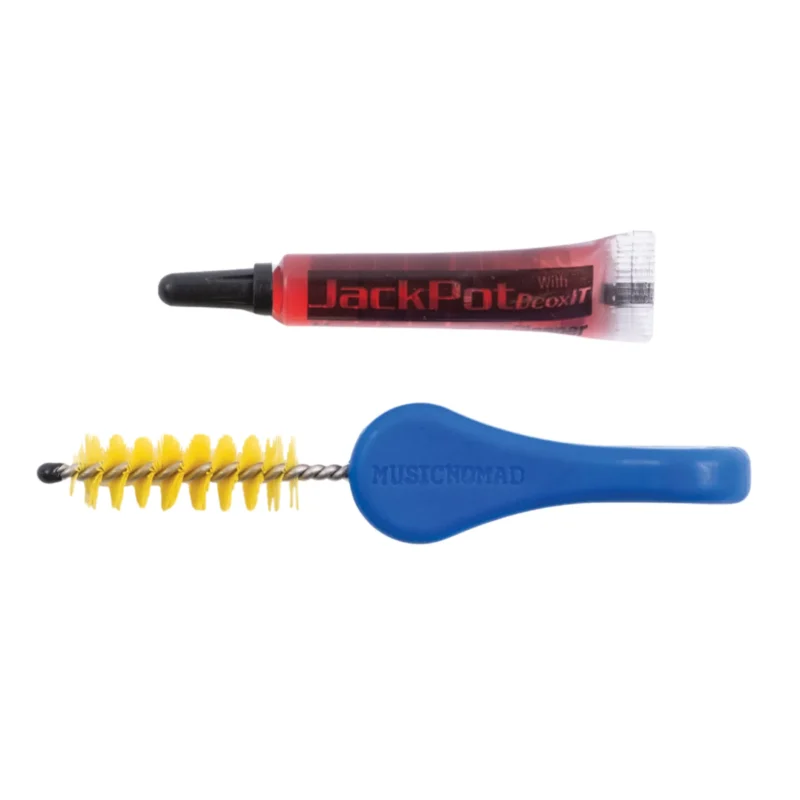
Fix Scratchy Sound & Signal Loss on Guitars &
Recording Audio Gear with JackPot Contact Cleaner
An acoustic guitar’s finish isn’t just for looks, it’s deliberately thin to let the wood breathe and create that rich, full tone. This also means it’s more vulnerable to damage. By keeping the finish, fingerboard, and bridge clean, you’re not just performing maintenance—you’re preserving the tone of your instrument. A little time spent caring for your guitar today guarantees it will continue to sound and feel amazing for decades.