
The Complete Guide To Guitar And Bass String Cleaning And Care
Dead strings will ruin your instrument’s tone. No matter how well your action is set, your pickups are dialed in, and your amp is ready to rock—dead strings will make everything sound bad. With a pack of guitar or bass strings ranging from $6 to $50 or more, taking care of your strings will save you money in the long run
Luckily, caring for your strings is easy and inexpensive. Just like tuning up before you play, cleaning your strings should be part of your regular guitar playing routine. All of the cleaning tips in this guide can be used on uncoated and coated electric, acoustic, classical guitar strings, bass strings, and more.
What Causes Guitar Strings To Go Dead Or Wear Out?
The natural oils and acidity in your skin and sweat cause your strings to oxidize and corrode. This causes dirt, grime, sweat, and dead skin to build up on the strings and between the windings, preventing them from vibrating fully. Over time, this will result in a lack of brightness and less sustain. The strings will also feel slower and bend unevenly across the frets.
Humidity also accelerates this process, especially on the bronze and copper in acoustic guitar strings. Over time, strings can tarnish, corrode, and even rust, further affecting their sound and longevity.
What Are The Benefits Of Proper String Care?
Most importantly, with clean strings, your guitar will play and sound better. You’ll also get a longer life out of your strings, saving you money. Additionally, your frets and fretboard won’t need cleaning as often, saving you from difficult deep cleaning or potentially costly repairs.
What Are The Key Performance Factors For Guitar Strings?
Fresh and clean strings have a bright and responsive tone when your pick hits them. Notes will jump out of the guitar and have a long, full sustain. Clean strings also bend better and snap back in tune more easily than dirty, worn strings. If your strings sound muted or feel rough, they need to be cleaned to perform better.
How Will I Know My Strings Need To Be Cleaned?
If you see visible dirt and hear less sustain and brightness, it’s time to clean your strings. New strings need to be cleaned too. If your fingers turn black after playing new strings, you need to remove the dirt and corrosion they have picked up since leaving the factory.
How Do I Increase The Life And Performance Of My Guitar Strings?
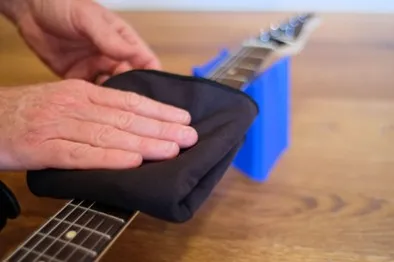
How Do I Clean My Guitar Strings?
- Use a microfiber cloth like 2 ‘n 1 Beyond Plush Players Cloth or Microfiber Suede Polishing Cloth to wipe the surface of the strings to remove excess dirt and grime.
- Use a string cleaner, like String Fuel to do a deep clean. Rub the applicator over the strings to remove the dirt and oxidation. String Fuel’s special formula not only removes the dirt, it rejuvenates and lubricates the string for a faster feel with less finger noise and squeak as you play.


The String Fuel applicator also contains a microfiber cloth to clean your strings between songs or to remove some of the String Fuel oils if you prefer a more traditional feel.
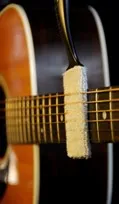
- For deep cleaning, clean the underside of the strings. For this deep cleaning we recommend The Nomad Tool. It’s thin and flexible with a microfiber pad to clean the top AND bottom of the guitar strings in seconds. It also cleans the frets and fingerboard at the same time.
How Do I Clean Wound Guitar And Bass Strings?
- Give the wound strings a wipe down with a microfiber cloth like our 2 ‘n 1 Beyond Plush Players Cloth or Microfiber Suede Polishing Cloth. The low pile microfiber gets in between the windings and cleans out the sweat, oils, and gunk better than a cotton cloth. Use your fingers and the cloth to give them a good scrub and remove the dirt out of the windings.
- For heavy wound strings, The Nomad Tool is perfect for really getting the built-up grime on the top and bottom of the strings.
- Follow up with a few passes of String Fuel for final cleaning and lubrication and your wound strings will sound and play better.
How Do I Clean Coated Or Tapewound Strings Like Elixir, DR Strings, Or La Bella?
-
- Give your strings a gentle quick wipe down between songs with a microfiber cloth like our 2 ‘n 1 Beyond Plush Players Cloth or Microfiber Suede Polishing Cloth. The low pile microfiber cleans the coating giving the strings a longer life.
- Use a string cleaner, like String Fuel to do a deep clean. Just like uncoated strings, with a deep clean coated and tapewound strings will last even longer. Just a few passes with String Fuel works great on coated strings, it removes the dirt and lubricates the coating for longer life and faster playing.
- Cleaning your coated strings before and after playing will significantly extend their life. String Fuel also acts as a lubricant, making coated strings play faster and slide easier with less finger noise.
How Do I Clean Nylon Classical Guitar Strings?
- Give your strings a gentle quick wipe down between songs with a microfiber cloth like our 2 ‘n 1 Beyond Plush Players Cloth or Microfiber Suede Polishing Cloth to remove the sweat, oils, and gunk
- Use a string cleaner. String Fuel also works great on nylon strings. Just a few passes with the special applicator removes the dirt.
- Essential for playing classical guitar, String Fuel also lubricates the strings to play faster and slide easier with less finger noise.
How Can I Reduce Finger Noise And Squeak On Guitar Strings?
How Can I Play Guitar Faster?
How Much More String Life and Performance Will I Get By Using A String Cleaner?
Can A String Cleaner Bring String Performance Back To Life?
Yes! By cleaning and removing the dirt, grime, and corrosion build up with a cleaner like String Fuel the string will be revitalized and will vibrate again more freely.
If a string is very old and dirty, the wire of the string may have been damaged. If you clean the string and performance is still lacking, it has been damaged or the metal has fatigued and should be replaced. By cleaning your strings regularly, you can extend the life of the strings and improve their performance right out of the package.