
Fretboard Cleaning And Care Guide
Why Is Fretboard Care Necessary?
While it may seem like simple wood and wire, your fretboard is where you truly connect with your instrument. Over time, dirt, dust, and grime will build up on your fretboard, giving it a sticky feeling, and a slow playing surface.
Without proper care, a fretboard can crack and frets can rust and oxidize, leading to expensive repairs or making your guitar unbearable to play. Luckily, it’s easy to clean, condition, and protect your fretboard to keep your guitar or bass playing better for life.
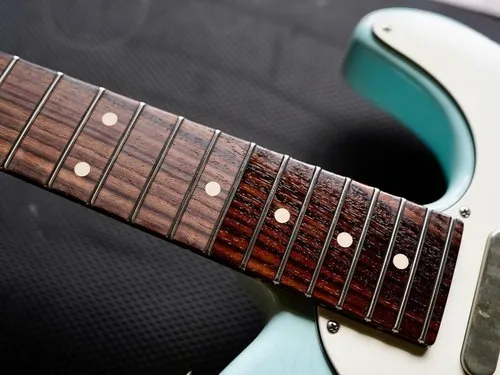
What Causes Fretboards To Get Dirt Or Grime On Them?
Your hands are the biggest reason fretboards get dirty and grimy. Dead skin, dirt or grime, and sweat from your fingers will build up on the fretboard as you play, giving it a sticky feeling. This sticky residue attracts dust and grime, even when your instrument is sitting in a stand.
That’s why fretboard care is crucial: dirt, dust, and grime build up when you’re playing and even when you’re not!
What Causes A Fretboard To Get Dry Or Crack?
Low humidity from dry air causes your fretboard to lose moisture and natural oils making it dry out or even crack. This is common in winter months when your heater is on or when running an air conditioner during summer. This causes the fretboard to look pale and chalky, feel rough, and make the guitar play slower or uncomfortable.
If the fretboard gets too dry, it will shrink, causing the fret ends to poke out, leaving them very sharp. This can be costly to repair unless you fix it yourself with our Fret Sprout Kit. Even worse, the fingerboard can lose so much moisture it will crack, which will only get worse over time and cause real playability issues and hurt the value of your guitar. Conditioning your fretboard will help protect it from drying out, and add the oils it needs to stay hydrated back into the wood.
What Types Of Unfinished Fretboard Woods Are There And How Do You Care For Them?
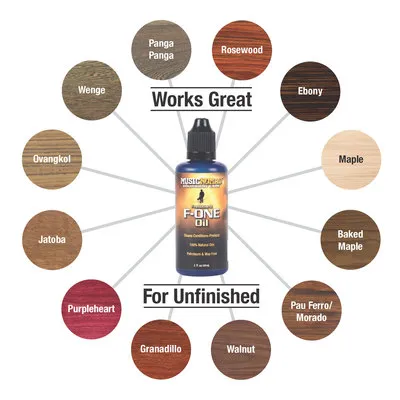
What Should I Use to Clean And Condition My Unfinished Fretboard?
- Do a light cleaning with a microfiber cloth like our Microfiber Suede Polishing Cloth to remove any loose dirt.
- Use a fretboard cleaner and conditioner like our F-ONE Oil. Unlike other cleaners and conditioners, F-ONE is formulated using a complex mixture of ultra refined tree and seed oils that help lift up the grime and also condition the wood. This brings moisture back and helps prevent it from drying out. This will keep the wood feeling and playing better longer.
- Add just a dab of oil between each fret and use your microfiber cloth to gently work the oil into the wood, making sure to get right up to the frets.
- Let the oil sit and penetrate the wood for a few minutes, up to 10 if the fretboard has more dirt and grime.
- After letting the oil penetrate, use a dry part of your cloth to buff out the oil, and you’re done. The wood will be rejuvenated and have a smoother feel and darker look, just as it did when it was new. For really dry fretboards, you may need to repeat the oil process. Maple fretboards won’t change in color very much, but will still feel smoother to the touch when conditioned.
- Do a light cleaning with a microfiber cloth like our Microfiber Suede Polishing Cloth to remove any loose dirt.
- Use a fretboard cleaner & conditioner like our F-ONE Oil to help lift up the grime and bring moisture back.
- Add just a dab of cleaner between each fret and use a cloth to scrub the dirt. We recommend the rough side of the 2 ‘n 1 Fretboard Cloth included with our F-ONE Unfinished Fretboard Care Kit. This will grab the dirt off the wood and trap it in the cloth.
- For really dirty fretboards, add another dab of cleaner and use a brush to scrub away the grime. The brush included with our F-ONE Unfinished Fretboard Care Kit has a special v-shape to get right next to the frets. This will help remove the grime built up around the frets which is very hard to reach with just a cloth.
- The brush also has a scraper to remove stubborn grime. Use the scraper to remove that hardened dirt, always going with the grain. You want to move the scraper along the path of the string, not across the fretboard. This is much safer than using a razor blade, which can easily gouge or scratch the wood.
- Finally use a soft microfiber cloth, like the soft side of the 2 ‘n 1 Fretboard Cloth to buff the fretboard and remove any excess cleaner.
- For really dry fretboards, you may need to reapply the oil to properly condition the fretboard.
For Light Cleaning
For Heavy Cleaning
What Types Of Finished Fretboard Woods Are There And How Do You Care For Them?
Many Fender guitars and basses have finished maple fretboards, while many Rickenbaker guitars and basses have finished rosewood fretboards. If your fretboard is glossy and has a smooth feel like a finished body, it is more than likely finished. Check with the manufacturer or guitar tech if you are unsure.
While the finish prevents the fretboard from drying out, it does not make it maintenance-free. To remove a light amount of dirt, give your fretboard a wipe down with a soft microfiber cloth like our Microfiber Suede Polishing Cloth. The low pile microfiber cleans the sweat, oils, and gunk before it builds up. It’s a good idea to do after you play.
If you’ve got built up or hard to remove dirt and grime, you need to deep clean the board to make it play its best.
What Should I Use to Clean My Finished Fretboard?
- Do a light cleaning with a microfiber cloth like our Microfiber Suede Polishing Cloth to remove any loose dirt. If the finish is flaky and worn, be very gentle and don’t use any other products.
- Use a finish cleaner like our Guitar Detailer. It works great on both matte/satin and gloss finishes.
- Spray a small amount of the cleaner onto the cloth and clean between each fret. Using your microfiber cloth to gently work the cleaner into the finish, making sure to get right up to the frets.
- If you have a gloss finished fretboard, you can do a deeper clean. Use a finish cleaner like our Guitar Polish. Use a small amount on a clean cloth and polish the finish on the fretboard to a high shine. Don’t use polish on a matte finish or raw wood.
- We don’t recommend using any cleaners with abrasives or rougher cloths to prevent scuffing the finish.
What If My Fretboard Is Painted or Stained?
What Should I NOT Use To Clean And Condition My Fretboard?
For unfinished fretboards, many products can do real harm to the wood. Things like furniture polish should never be used on your guitar. While lemon oil is recommended by some, it can actually be acidic and dry out a fretboard faster, requiring more applications. We don’t recommend using it on your fretboard.
Cleaners with water or petroleum products can also harm the wood by not drying evenly or leaving it feeling sticky. We recommend our F-ONE Oil, which is made from hyper-refined tree and seed oils. These oils are closer to natural oils in the wood so it is absorbed and dries evenly, making the board feel amazing and protecting and conditioning it.
Do I Need To Remove The Strings Before Cleaning The Fretboard?
For a light cleaning, you can use a cloth between the strings and the fretboard to remove dust. The Nomad Tool makes this much easier and grabs much more dirt than just a cloth alone.
To remove dirt and grime, removing the strings is necessary. By removing the strings you’ll have full access to clean the fretboard. It will make it much easier to get the stubborn dirt next to the frets. You also don’t want to get oil or polishes on your strings. If you are doing a deep cleaning using a rougher cloth, brush, or scraper, having the strings out of the way will make the job faster and prevent damaging the strings.
How Often Should I Clean and Condition My Fretboard?
If you play often, sweat while playing, or leave your guitar out of a case or hung on a wall, you may need to clean and condition your fretboard more often. A good rule is that if your fretboard feels sticky, you see a buildup of grime around the frets, or your fretboard plays more slowly, it’s time to clean it.
We recommend cleaning and conditioning your fretboard every six months. The dry winter months with a heater running and hot months with an air conditioner running can really dry out and damage your fretboard. Adding needed oils back to the wood, like those in our F-ONE Oil, will keep your fretboard playing great and hydrated all year long. A good rule is that if your fretboard looks pale, feels rough, or plays slower than normal, it’s time to condition your fretboard.